

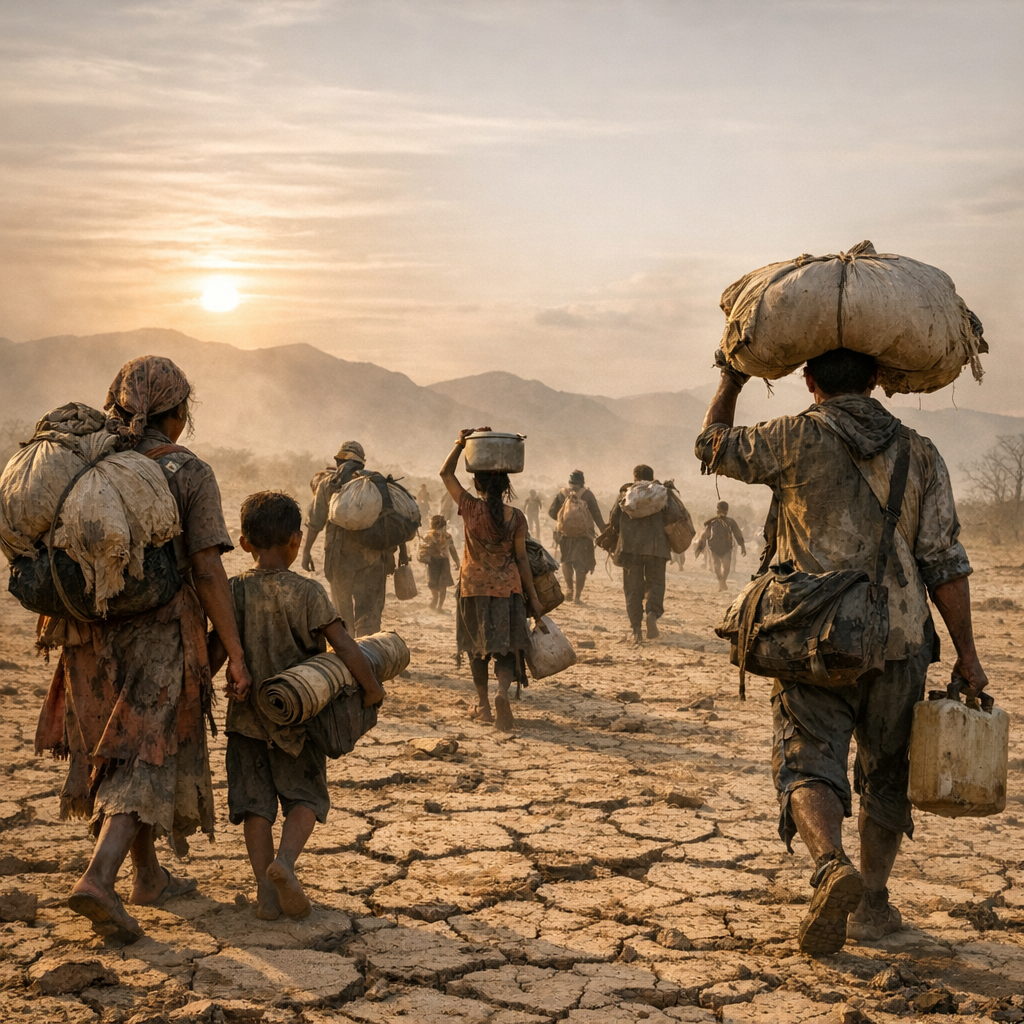
From extreme weather to sea-level rise and slow environmental decline, climate change is changing where and how people live. As global pressure mounts, new efforts are emerging to reduce displacement and support communities facing climate-linked migration. These issues transcend geography—and Thornton, like many places, is connected in complex ways to what’s happening globally.
What is climate mobility?
Climate mobility refers to the movement, forced or voluntary, of people due to climate-related environmental stress—such as stronger storms, droughts or loss of livable land. This includes those displaced by sudden disasters and those who must leave gradually as conditions worsen. It’s a global pattern, not just isolated incidents.
How big is the challenge?
By the end of 2025, the UN counted roughly 117.8 million people forcibly displaced worldwide due to conflict, violence, persecution or serious disruption—many of whom also face climate-linked pressures at home. Over 68 million were internally displaced in their own countries. Millions more are stateless or in situations lacking full protection and support. Addressing climate’s role in all of this is now seen as essential.
Global efforts gaining traction
This year saw more than 100 countries endorse the Global Climate Mobility Principles, a rights-based framework aimed at guiding states on climate displacement, migration, relocation, and even cases where people are unable to move. These principles insist on coordinated international cooperation, grounded in vulnerable regions and inclusive of local voices.
The World Health Organization released a research agenda focused on health, migration and displacement in climate contexts. It highlights critical gaps—how structural factors affect health access during migration, how emergency systems can adapt, and how data needs to better capture diverse migrant experiences.
The role of local action
While many frameworks are crafted globally, their success depends heavily on local communities. The International Organization for Migration has emphasized how local governments, Indigenous groups, civil society, and the private sector are essential in translating ideas into effective adaptation and displacement responses.
Additionally, new tools are helping guide decision makers: climate mobility innovation labs, risk indices to identify hotspots, and catalytic funds to invest in early-action solutions. These tools aim to connect research, policy, and practice on the ground.
Relevance to Thornton and beyond
Though Thornton isn’t deeply exposed to coastal erosion or storms, climate mobility still matters here. Families with migrant roots, global connections, and those supporting immigrant neighbors feel the ripple effects—through remittances, advocacy, labor shortages, and shared stories. What happens in distant flood-zones or drought-ravaged rural areas matters to how we think about justice, migration, opportunity and planning here.
What’s next?
- Advancing more inclusive data that reflects lived experiences of displacement, not just numbers.
- Strengthening legal frameworks—both international and local—that protect rights of people on the move or left behind.
- Scaling early action: supporting adaptation, infrastructure, relocation when necessary, and community resilience before disaster strikes.
- Building connections between Thornton and global partners—through academic, community or faith engagement—to raise awareness and promote solidarity.
As climate migration becomes an increasingly urgent part of the global picture, it demands our attention—not only from those directly affected, but from all communities tied together in today’s interconnected world.